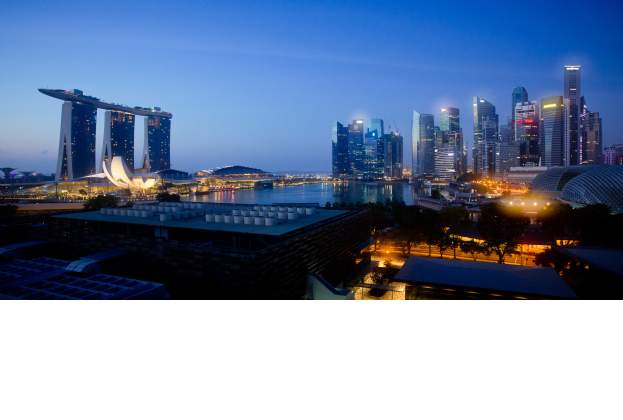
The Shenzhen comparison is not hyperbole — it is a structural parallel worth examining closely. The Johor-Singapore Special Economic Zone (JS-SEZ), established by a bilateral agreement signed on 7 January 2025, spans roughly 3,500 km² across nine flagship zones — more than four times the size of Singapore and comfortably larger than China's Shenzhen.¹² What Shenzhen was to Hong Kong in the 1980s — a manufacturing and technology base developing in the shadow of a global financial centre — Johor is beginning to replicate for Singapore.
The thesis here is not affordability arbitrage. It is being early to a structural economic shift that is generating sustained, policy-backed demand for quality corporate housing from a tenant base that did not exist five years ago. The discipline, as this article sets out, is that the thesis holds only for the right assets in the right locations.
The Economic Case: What Makes This Different From Previous Johor Cycles
The scale of committed investment
This is not a lifestyle cycle underwritten by speculative buyers. It is operational capital expenditure. In the first nine months of 2025, Johor was Malaysia's top state for approved investment at RM91.1 billion, with the JS-SEZ accounting for 74.6% of that — RM68 billion — and Singapore the single largest source of investment at RM28.5 billion. The capital is concentrated in high-value sectors: data centres and AI infrastructure, advanced manufacturing (electrical and electronics, chemicals, medical devices), logistics and financial services.¹ Johor closed the full year at a record RM110 billion in approved investment — roughly double its combined 2023–2024 total.¹
The tax incentive stack
The JS-SEZ package is engineered to pull corporate headcount across the Causeway: a special corporate tax rate of 5% for up to 15 years for qualifying high-value activities, a 100% investment tax allowance on qualifying capital expenditure, stamp-duty exemptions on eligible commercial property, and — most relevant to the landlord thesis — a flat 15% personal income tax rate for eligible knowledge workers for 10 years.³ That knowledge-worker rate is doing real work: it is actively drawing a high-income, internationally mobile talent base into the JS-SEZ footprint, and that talent needs housing that matches its profile.
The connectivity infrastructure
The RTS Link — a 4km cross-border rail line from Bukit Chagar in Johor Bahru to Woodlands North in Singapore — is targeted to begin service around the end of 2026 into early 2027, cutting the crossing to about five minutes and carrying up to 10,000 passengers per hour in each direction.⁵ That reprices what "proximity to Singapore" means for Johor residential property, turning a daily friction point into a short rail hop. Passport-free QR-code clearance has already been trialled at the main land checkpoints since September 2025, and customs processes have been streamlined.¹ In practical terms, the border is already becoming less of a border.
The New Tenant: Who Is Actually Renting This Housing
The corporate knowledge worker
The 15% personal income tax incentive is designed to attract exactly this profile — engineers, data scientists, operations managers and regional executives — into Johor-based roles with multinationals. Companies are already adopting the "twinning" model: South Korea's SPC Group, for example, runs manufacturing in Johor while anchoring higher-value functions in Singapore.² The employees who manage that operational split need quality housing in Johor — not the stock that served the market before the SEZ. This tenant is internationally mobile, corporate-sponsored and income-tax advantaged: structurally different from the speculative rental demand that underwrote previous Johor cycles.
The Singapore commuter class
A growing work-in-Singapore, live-in-JB population is creating durable demand for well-located, fully furnished condominiums. The arbitrage is structural rather than cosmetic: a well-located furnished JB unit can let for roughly RM1,800–3,200 a month, while a comparable rental on the Singapore side of the crossing runs materially higher — and the RTS removes the last meaningful friction from that trade-off.⁴
The expatriate executive
International firms establishing Johor operations typically provide housing allowances for relocated staff. That creates a genuine corporate-landlord opportunity, where the effective covenant behind the tenancy is a creditworthy multinational rather than an individual — a materially different risk profile from discretionary retail demand.
The Numbers: What the Market Is Actually Doing (and the Risk Beneath Them)
Official data tells a more disciplined story than the headline figures often quoted. Malaysia's National Property Information Centre (NAPIC) house price index shows Johor residential prices up in the mid-single digits — around 6% — over the past year, but the growth is highly uneven: well-connected nodes near the RTS Link and JS-SEZ have risen faster, in the region of 7–9%, while supply-heavy outer high-rise pockets have lagged at 2–4%.⁴ Reported gross rental yields for prime, RTS-adjacent city-centre condominiums and serviced apartments sit around 6–8%, above a market average closer to 5–6%.⁴
The caveat that separates a serious thesis from a sales pitch: Johor carries the highest serviced-apartment overhang in Malaysia, concentrated precisely in the high-rise segment near these corridors.⁴ Generic towers competing for the same tenant pool can achieve materially lower real yields and slow resale. In other words, the corporate-landlord thesis is real — but it is an argument for selectivity, not for the segment as a whole.
Why "Corporate Landlord" Is the Right Frame for This Market
Institutional demand, not lifestyle demand
Previous Johor cycles were driven by lifestyle buyers and speculators. The JS-SEZ cycle is driven by corporate headcount expansion in defined sectors, with employment growth that is policy-anchored and comparatively predictable. The corporate landlord owns the housing infrastructure a growing zone's workforce needs — a position with structurally lower vacancy risk than a market driven by discretionary demand, provided the asset sits where that workforce actually forms.
The MM2H dimension
Singapore investors weighing longer-term Johor arrangements — as owner-occupiers as well as landlords — should understand how the revised Malaysia My Second Home (MM2H) programme interacts with this thesis. For a full breakdown, see our companion article, Why Some Singaporeans Are Considering a Second Home in Malaysia Without Leaving Singapore — Thanks to MM2H
Location discipline
Not all Johor property benefits equally. The corporate-landlord thesis applies specifically to assets within the RTS catchment and the designated flagship zones — particularly Johor Bahru city centre, Iskandar Puteri and the Senai–Skudai corridor. Assets outside these corridors are exposed to the oversupply dynamics that undermined earlier cycles. Micro-location relative to the SEZ footprint and the station — a genuine walk to Bukit Chagar, not a "15 minutes by car" claim — is the single most important decision an investor makes here.¹²
M Grand Minori: Positioned for the Corporate Tenant
M Grand Minori — the Mah Sing development that Savills Singapore markets — sits at the specification and location tier this tenant base demands. It is a freehold serviced-apartment tower in Taman Pelangi, in the Johor Bahru CBD and roughly 3km from the Bukit Chagar RTS station, with efficient layouts and dual-key options suited to the commuter and corporate-let profile. Phase 1's first tower drew a 90% take-up over its opening weekend — an early read on where transit-anchored demand is concentrating.
For buyers evaluating M Grand Minori alongside the broader Johor market and other regional opportunities, the full range of Savills international residential opportunities in Asia is available online.
The Window Before the RTS Opens
The most significant near-term catalyst is the RTS opening, targeted for late 2026 into early 2027. Once it runs, the re-pricing of genuinely transit-adjacent assets will be immediate and visible — and the entry point available today will have moved. The investor who acts on the JS-SEZ thesis before the ribbon is cut is buying the infrastructure story at the infrastructure price; afterwards, they are buying it at the destination price. The discipline is to buy the right asset — well-located, in a flagship corridor, at a genuine walk to the station — rather than the segment at large.
Talk to the Savills International Residential Team
Whether you are evaluating your first Johor acquisition or building a multi-unit corporate rental portfolio, the Savills International Residential team can model the full picture — acquisition costs, realistic rental-yield projections, tenant-profile analysis and exit strategy.
Explore Johor properties with Savills →
Footnotes
¹ Invest Johor (Johor State Investment Centre), "Johor-Singapore Special Economic Zone (JS-SEZ)" — approved-investment figures, JS-SEZ share, connectivity, and signing date (7 January 2025). https://www.investjohor.gov.my/
² Singapore Economic Development Board (EDB), "Johor-Singapore Special Economic Zone" — zone scope (nine flagship zones, sectors), twinning model. https://www.edb.gov.sg/en/johor-singapore-special-economic-zone.html
³ CNP Law, "Johor-Singapore Special Economic Zone" update — tax-incentive package (5% corporate rate, 100% investment tax allowance, stamp-duty exemptions, 15% knowledge-worker rate). https://www.cnplaw.com/johor-singapore-special-economic-zone-may-2025-update/
⁴ National Property Information Centre (NAPIC), Malaysian House Price Index and Property Market / Overhang reports (Johor residential price movement, serviced-apartment overhang, yield context). https://napic.jpph.gov.my/
⁵ Land Transport Authority (LTA), "Johor Bahru – Singapore Rapid Transit System Link" — route, ~5-minute journey, 10,000 passengers/hour/direction, target opening. https://www.lta.gov.sg/content/ltagov/en/upcoming_projects/rail_expansion/JB-Singapore_RTS_link.html